

The E-Commerce Landscape in Ethiopia
Ethiopia’s digital economy is evolving, yet the agricultural and grocery e-commerce sector remains underdeveloped. While platforms like Kegeberew and ChipChip have emerged, they have faced challenges in sustaining operations and addressing the complexities of the agricultural supply chain.
The Rise and Fall of Kegeberew: A Tale of Ambition and Lessons Learned
In the bustling heart of Addis Ababa, amidst the vibrant markets and the hum of daily commerce, a vision was born. It was 2020, and Purpose Black Ethiopia, a company known for its innovative approach to business, saw an opportunity to revolutionize the way Ethiopians accessed fresh produce. The idea was simple yet ambitious: create an e-commerce platform that would connect farmers directly with consumers, eliminating middlemen and reducing grocery prices.
Thus, Kegeberew was launched. The name itself, meaning “from farmers” in Amharic, symbolized a new era of digital commerce in Ethiopia. The platform promised to bring fresh, locally sourced produce to the fingertips of consumers, offering convenience and affordability.
At first, the response was overwhelming. Farmers embraced the platform as a means to reach a broader market, while consumers welcomed the convenience of affordable fresh produce. Kegeberew’s user-friendly interface and efficient delivery system garnered attention, and the platform quickly gained traction in urban areas.
The success was not just in numbers but in the stories of individuals whose lives were touched. A farmer from the highlands of Tigray reported increased sales and better prices for his produce. A mother in Addis Ababa shared how Kegeberew made it affordable meals for her family without.
However, as with many ambitious ventures, the initial success was followed by unforeseen challenges. The agricultural supply chain in Ethiopia, already complex and fragmented, posed significant hurdles. Kegeberew struggled with sourcing consistent quality produce, managing inventory, and ensuring timely deliveries across the country.
Moreover, the platform faced stiff competition from traditional markets. The digital divide in rural areas limited the reach of the platform, and logistical issues became more pronounced as the demand grew.
Despite efforts to address these challenges, Kegeberew’s operations began to falter. The once-thriving platform saw a decline in user engagement and a drop in sales. Farmers, who had initially embraced the platform, became disillusioned due to inconsistent orders and delayed payments. Consumers, too, began to turn back to traditional markets, where they could see and select their produce firsthand.
In 2023, after three years of operation, Kegeberew ceased its services. The dream of transforming Ethiopia’s grocery market through digital innovation had come to an end.
The Lessons Learned
Kegeberew’s journey, though short-lived, was not in vain. It highlighted the complexities of integrating technology into Ethiopia’s agricultural sector. The experience underscored the importance of understanding local contexts, building robust supply chains, and addressing infrastructural challenges.
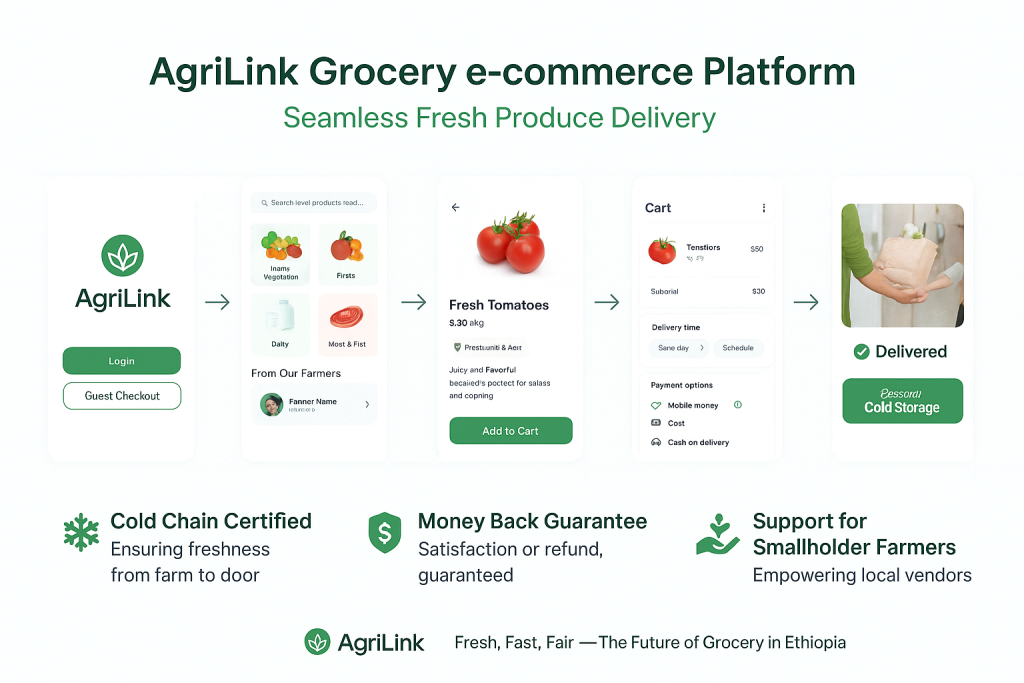
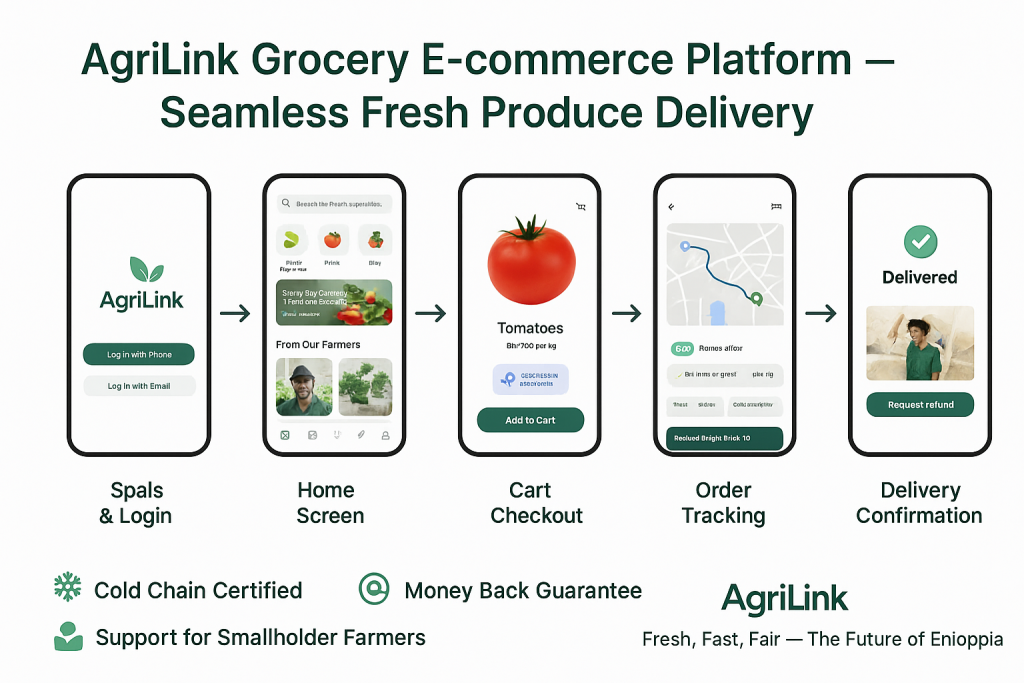
For AgriLink Africa, these lessons have been invaluable. As we prepare to launch our own agricultural and grocery e-commerce platform, we are committed to learning from Kegeberew’s experiences. Our approach will focus on sustainable practices, farmer empowerment, and leveraging technology to bridge the gap between rural producers and urban consumers.
Chip-Chip Ethiopia: Bridging Gaps in Agricultural E-Commerce

A Promising Start
A year ago, Chip-Chip emerged as one of Ethiopia’s first social buying platforms, aiming to make fresh produce more accessible and affordable. The concept was simple but bold: allow consumers to pool orders through group buying, enabling them to purchase fruits and vegetables at lower prices while connecting farmers directly with urban consumers.
At first glance, Chip-Chip seemed like a solution tailor-made for Ethiopia’s growing e-commerce market. Farmers could access a broader customer base, and consumers could enjoy savings on fresh produce.
But as the platform grew, several challenges became apparent challenges that revealed the complexity of running a truly sustainable agricultural e-commerce business.
Gap 1: Supply Chain Management – The Last Mile Struggle
For any grocery e-commerce platform, delivery speed is everything. Customers expect fresh produce to arrive quickly and in good condition. Unfortunately, Chip-Chip struggled with last-mile delivery.
Orders, especially in urban areas, could take several days to arrive, with some deliveries delayed up to five days. For fresh fruits and vegetables, this delay is more than inconvenient — it undermines the freshness of the product and the trust of consumers.
As one Addis Ababa customer shared:
“I like the idea of Chip-Chip, but waiting almost a week for fresh vegetables is hard when I need them for my daily meals.”
Gap 2: Limited Farmer Integration
While Chip-Chip has helped connect some urban consumers to fresh produce, the platform’s integration with farmers is very limited. Unlike a direct farm-to-consumer model, Chip-Chip primarily sources produce from its own stock, rather than connecting consumers directly to smallholder farmers.
This approach may simplify operations and reduce some logistical risks, but it also limits market access for farmers and reduces the platform’s impact on the broader agricultural supply chain. Many farmers remain outside the digital marketplace, unable to benefit from new market opportunities or higher prices for their produce.
The result? The platform helps consumers, but its potential to empower farmers and strengthen the supply chain is not fully realized.
Gap 3: The Group-Buying Challenge
Chip-Chip’s model revolves around group buying — pooling orders to achieve lower prices. While innovative, this mechanism introduces friction for consumers:
- Dependency on others: An individual first needs to join or form a group to access discounted pricing.
- Long delivery times: Group orders can take up to five days to fulfill because the platform waits to accumulate enough orders for processing.
For grocery items, waiting five days can be inconvenient or even impractical. Customers often seek immediate access to fresh produce, which group buying struggles to accommodate.
The Story So Far
Chip-Chip has brought important innovation to Ethiopia’s e-commerce space. It has introduced a social buying concept, expanded digital awareness, and started connecting urban consumers to farmers. But the platform’s gaps reveal why sustainable agricultural and grocery e-commerce has yet to thrive in Ethiopia.
For the average consumer, waiting several days and navigating group buying can be frustrating. For farmers, limited access and support reduce the platform’s impact. And for the platform itself, last-mile delivery inefficiencies limit growth and scalability.
Looking Ahead
The lessons from Chip-Chip’s journey are clear:
- Consumers need fast, reliable delivery for fresh produ
- Every farmer should be able to access the platform, connecting directly to larger markets it’s a simple idea that can make a big difference.
- E-commerce platforms must balance affordability with convenience, especially for grocery items.
A Call to Action
The journey of Kegeberew and ChipChip highlights the complexities and challenges of establishing a sustainable agricultural and grocery e-commerce platform in Ethiopia. However, these experiences also provide valuable lessons that can inform future initiatives.
These gaps create a unique opportunity for AgriLink Africa. By addressing supply chain inefficiencies, expanding farmer participation, and simplifying order fulfillment, AgriLink Africa is preparing to launch a game-changing agricultural and grocery e-commerce platform in Ethiopia — one that learns from the past but delivers solutions for the future.
Stay tuned as we prepare to launch a game-changing solution that will redefine the agricultural e-commerce landscape in Ethiopia.

Abenezer Wondimagegn is the Founder & CEO of AgriLink Africa, a Research & Data Analyst, and Article Publisher. He specializes in Agriculture, Supply Chain, Logistics, Nutrition, E-commerce, and Business Investment. Through his work, he empowers farmers, strengthens food systems, and shares insights to drive innovation and sustainable growth in Ethiopia’s agricultural sector.

