

Food security in Africa is often framed as a production problem — low yields, climate shocks, land degradation, and population growth. While these factors matter, they do not explain Africa’s persistent food insecurity.
The continent already produces sufficient aggregate food volumes to meet basic caloric needs in many regions. Yet hunger, malnutrition, and food instability persist.
This contradiction reveals a deeper truth:
Africa’s food security crisis is fundamentally a market failure — not a production failure.
The real constraints lie in access, affordability, logistics, distribution systems, and market design.
The Food Availability Paradox
Africa’s agricultural output has grown steadily over the past two decades. The Food and Agriculture Organization reports consistent increases in cereal production, horticulture output, and livestock volumes across multiple regions FAO, 2022
At the same time, millions remain food insecure.
The FAO estimates that over 280 million people in Africa experience food insecurity, despite rising production FAO, 2023
This paradox shows that food scarcity is not primarily caused by insufficient production capacity — but by systemic failures in distribution, access, and affordability.
Food exists in markets.
Food fails to reach people.
Access and Affordability Failures
Food security depends not only on supply, but on economic access.
The World Bank identifies affordability as a core determinant of food insecurity, showing that millions of households face hunger not because food is unavailable, but because it is economically inaccessible World Bank, 2022
High food prices relative to income levels make food functionally unavailable to large populations.
Urban and rural poor households spend 50–70% of their income on food, making them highly vulnerable to price shocks African Development Bank, 2021
Food insecurity becomes a purchasing power problem, not a production problem.
The Role of Markets and Logistics
Weak market systems convert availability into scarcity.
The World Bank shows that poor logistics, fragmented value chains, and weak market integration prevent food from moving efficiently from surplus zones to deficit zones World Bank, 2020
Post-harvest losses alone remove up to 30–40% of food from supply chains, particularly perishables, due to poor storage and transport systems FAO, 2019
Logistics failures create artificial scarcity.
Markets fail not because food does not exist — but because systems cannot move it efficiently.
Urban Food Insecurity
Africa’s food crisis is increasingly urban.
The World Bank estimates that over 60% of Africa’s population will live in cities by 2050, dramatically increasing urban food demand World Bank, 2023
Urban households are almost entirely dependent on markets for food access.
UN-Habitat identifies market access, price volatility, and informal food systems as major drivers of urban food insecurity UN-Habitat, 2020
This means food security is now primarily a market access challenge, not a farming challenge.
System Solutions
Solving food insecurity requires system design, not isolated interventions.
Market Infrastructure
Investment in storage, logistics, aggregation hubs, and cold chains reduces loss and improves distribution efficiency World Bank, 2016
Market Information Systems
Digital pricing and market data platforms improve transparency and access World Bank, 2019
Market Integration
Regional trade integration stabilizes supply flows and reduces localized shortages African Union, 2015
Income Systems
Food security requires income security. Social protection and market-based income systems improve purchasing power World Bank, 2022
Institutional Market Design
OECD research shows that stable food systems require institutional market architecture, not price controls OECD, 2020
Africa does not suffer primarily from a production crisis.
It suffers from a market system failure.
Food insecurity persists because:
- Markets fail to distribute efficiently
- Logistics systems are weak
- Storage infrastructure is insufficient
- Access is unequal
- Affordability is constrained
- Market institutions are fragile
Until Africa builds food systems as market systems, food security will remain fragile — regardless of production gains.
Food security is not achieved in fields alone.
It is achieved in markets, systems, and institutions.
AgriLink Think Tank
Where African Agricultural Intelligence Is Written
Hot Topics
Grid

🌾 The Hidden Cost of Post-Harvest Losses — and How to Stop It
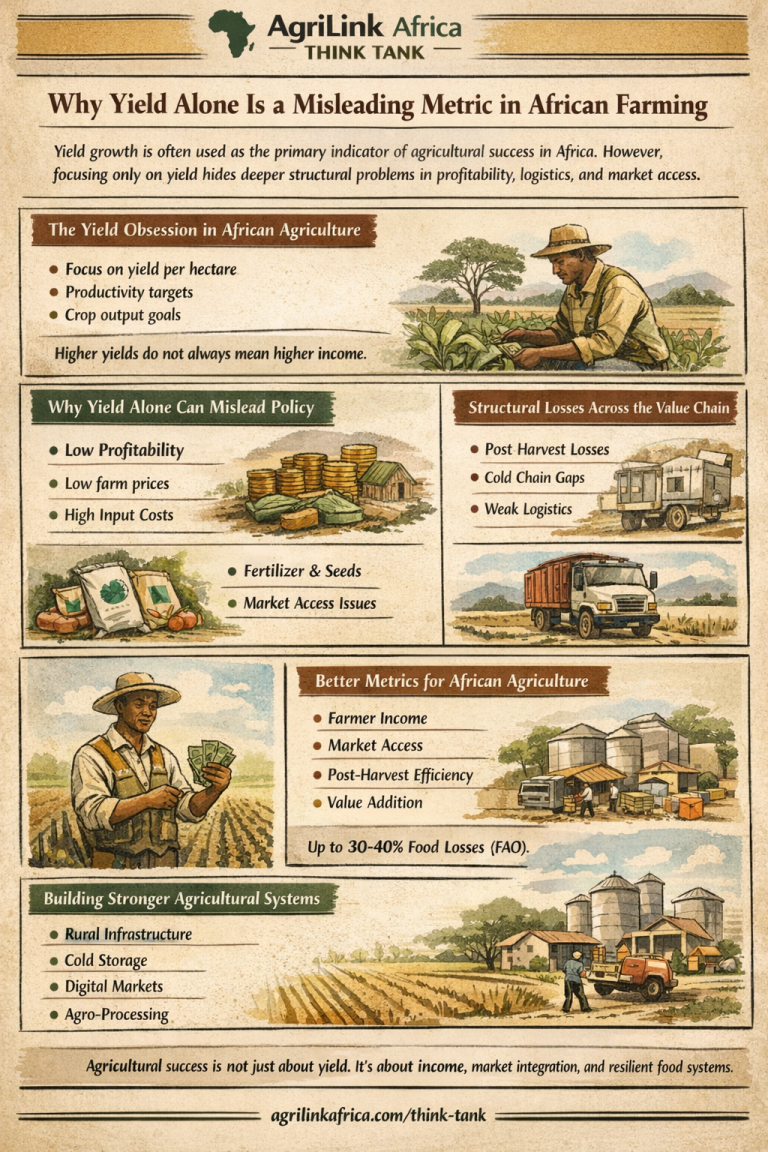
Why Yield Alone Is a Misleading Metric in African Farming
Why Sustainable Agricultural and Grocery E-Commerce Hasn’t Thrived in Ethiopia — and How AgriLink Africa Is Changing That
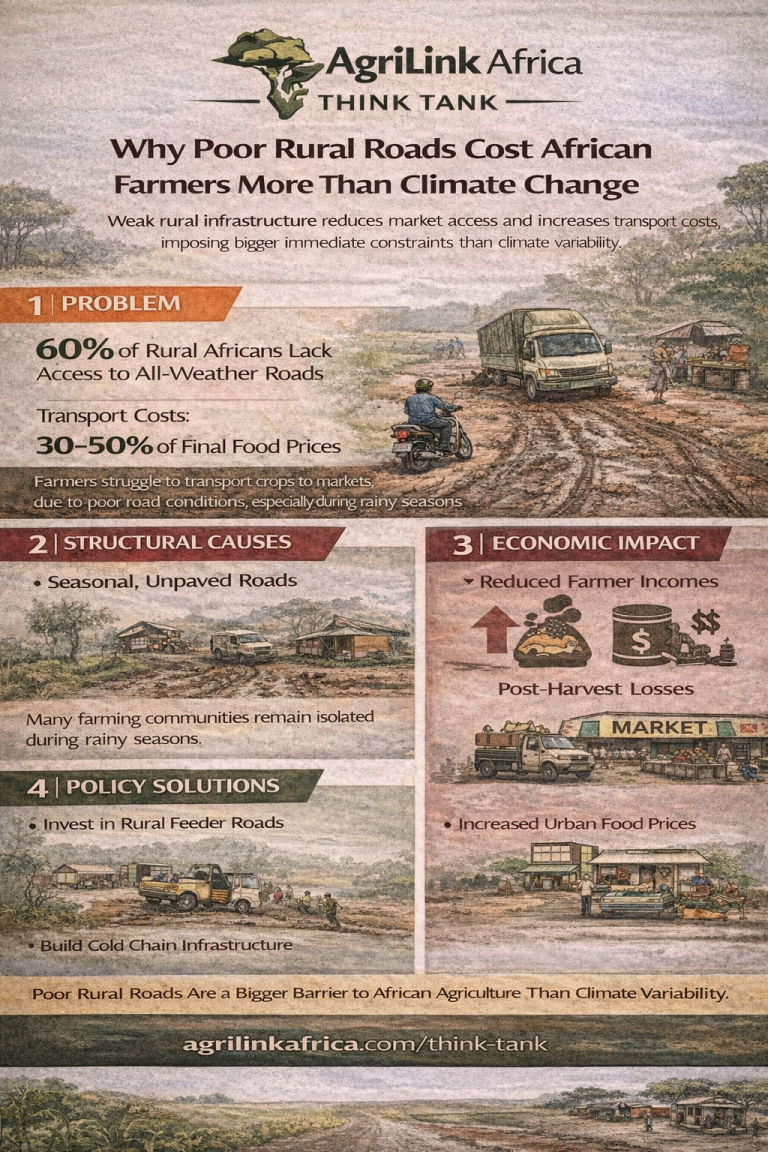
Why Poor Rural Roads Cost African Farmers More Than Climate Change
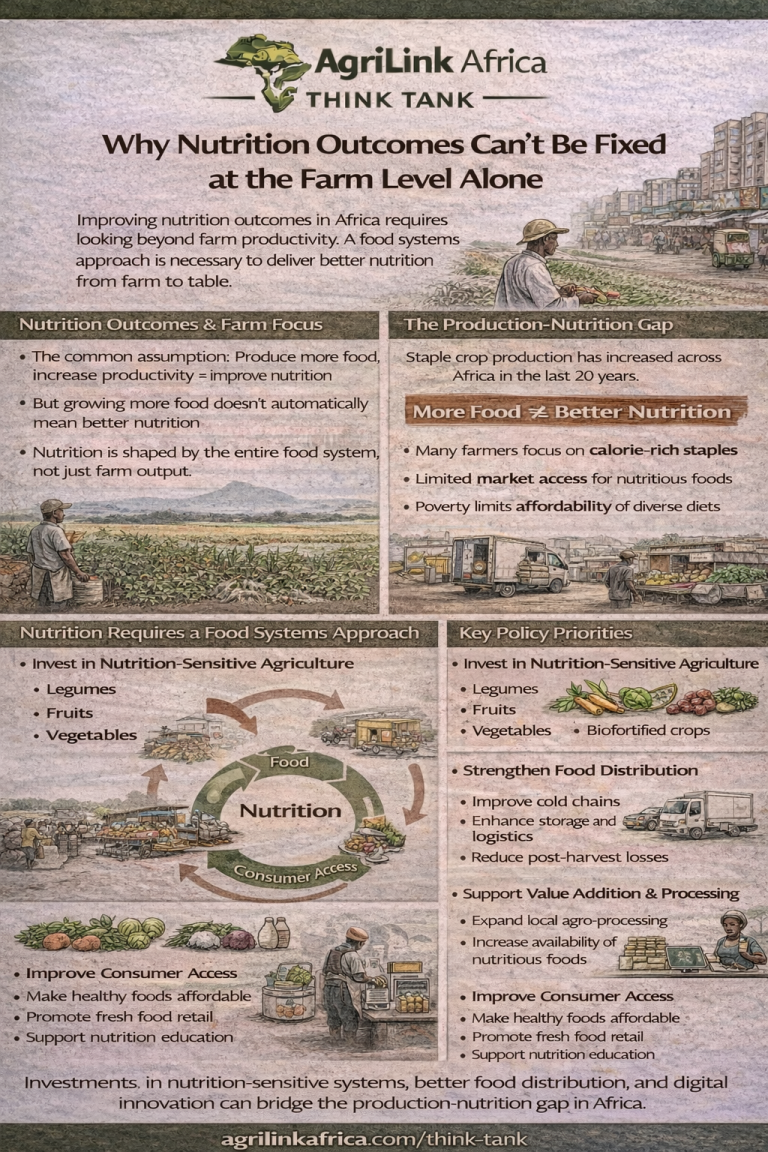
Why Nutrition Outcomes Can’t Be Fixed at the Farm Level Alone
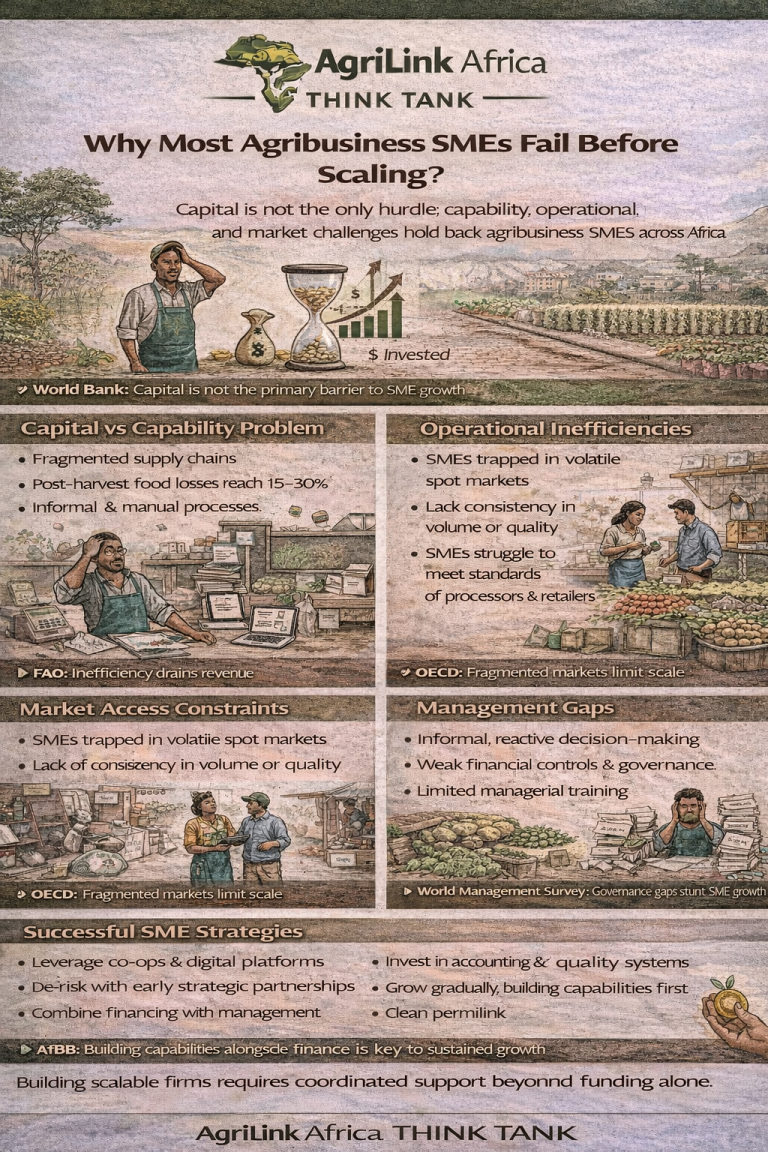
Why Most Agribusiness SMEs Fail Before Scaling
List
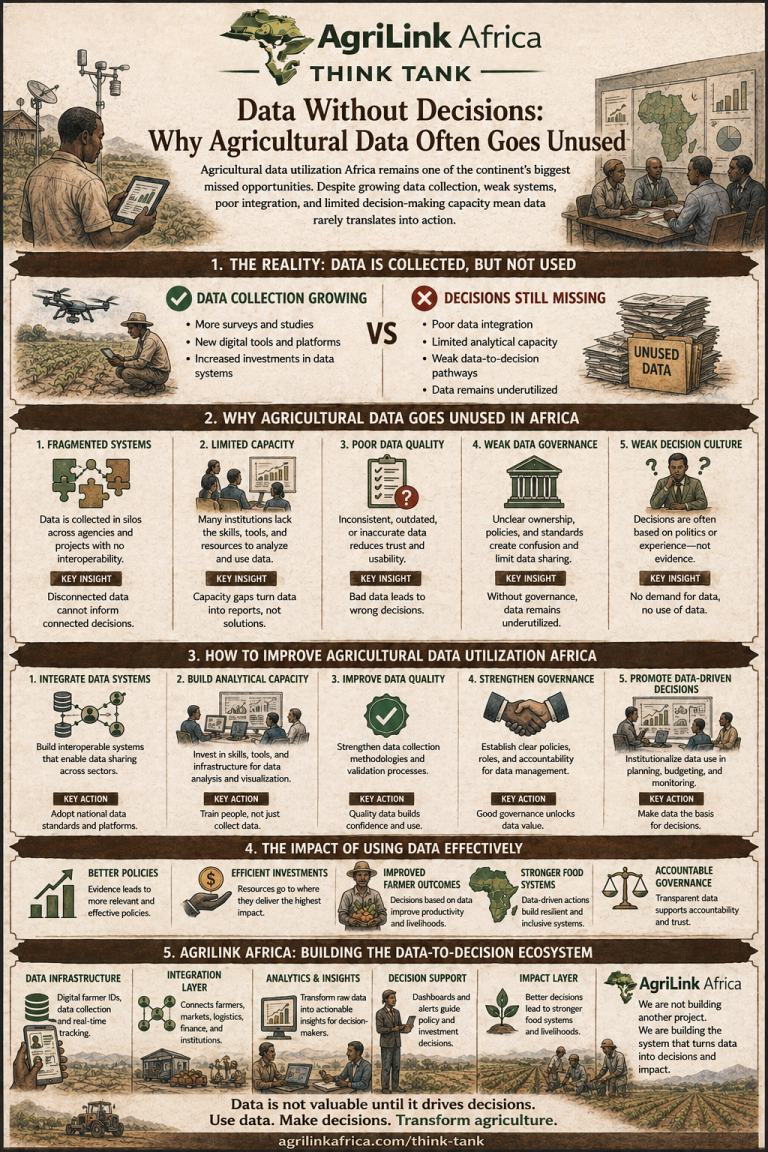
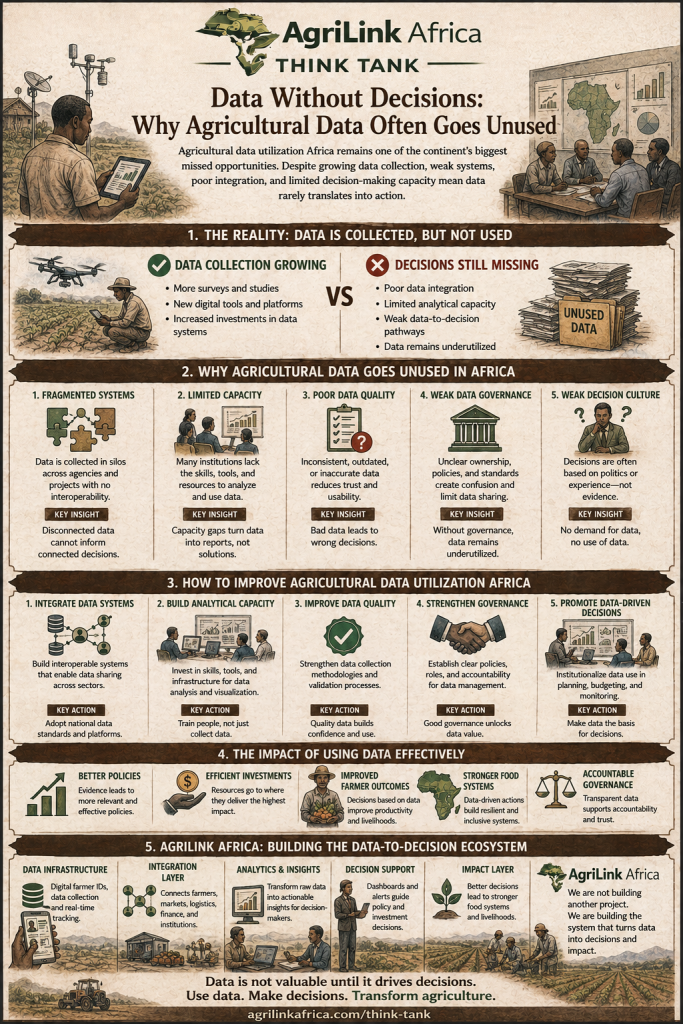
Agricultural Data Utilization Africa: Why Data Without Decisions Is a System Failure
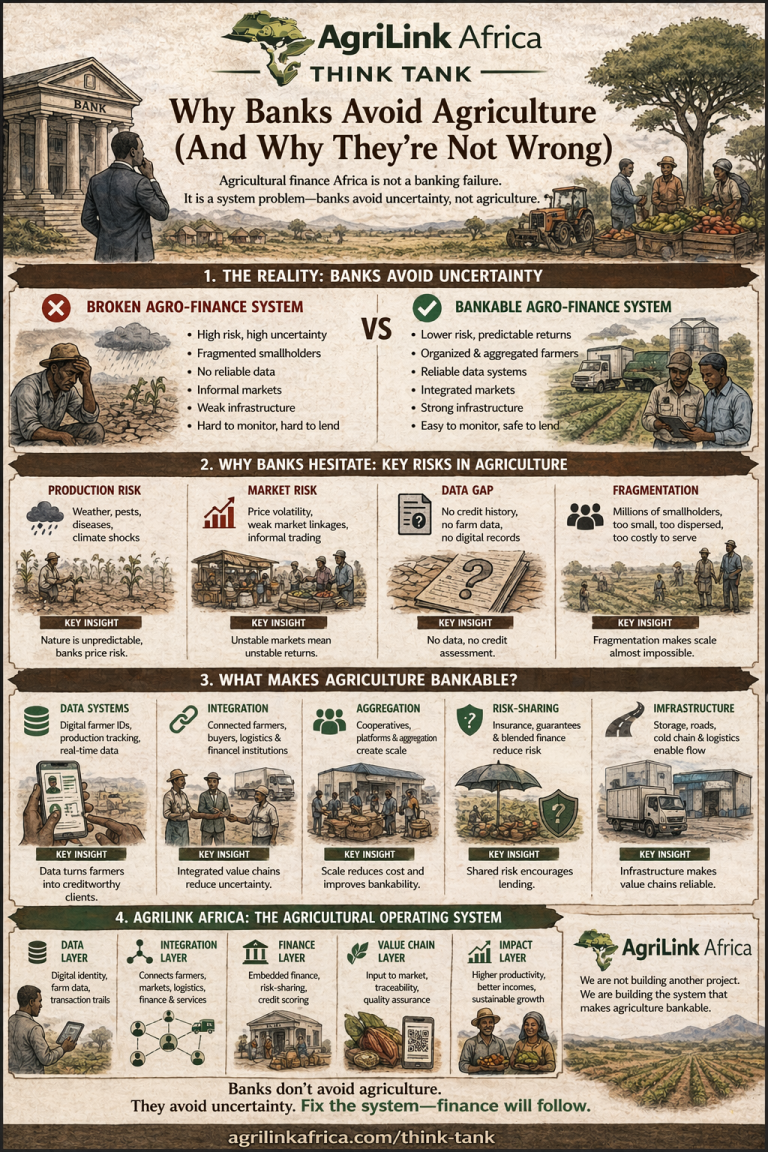
Why Banks Avoid Agriculture & Why They’re Not Wrong
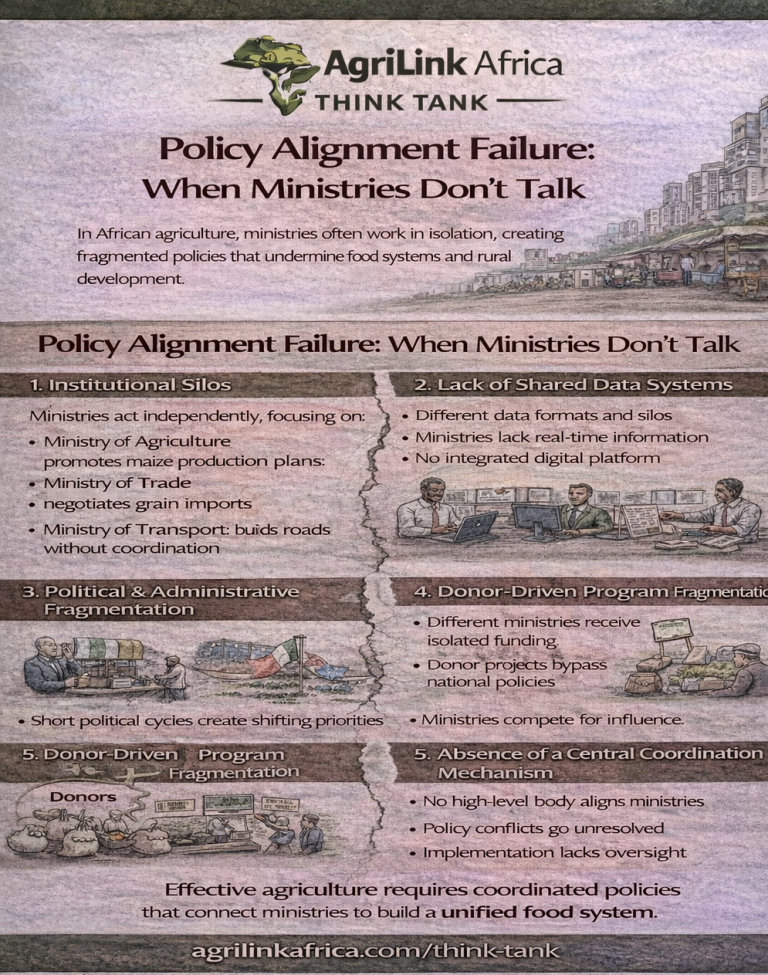
Policy Alignment Failure: When Ministries Don’t Talk
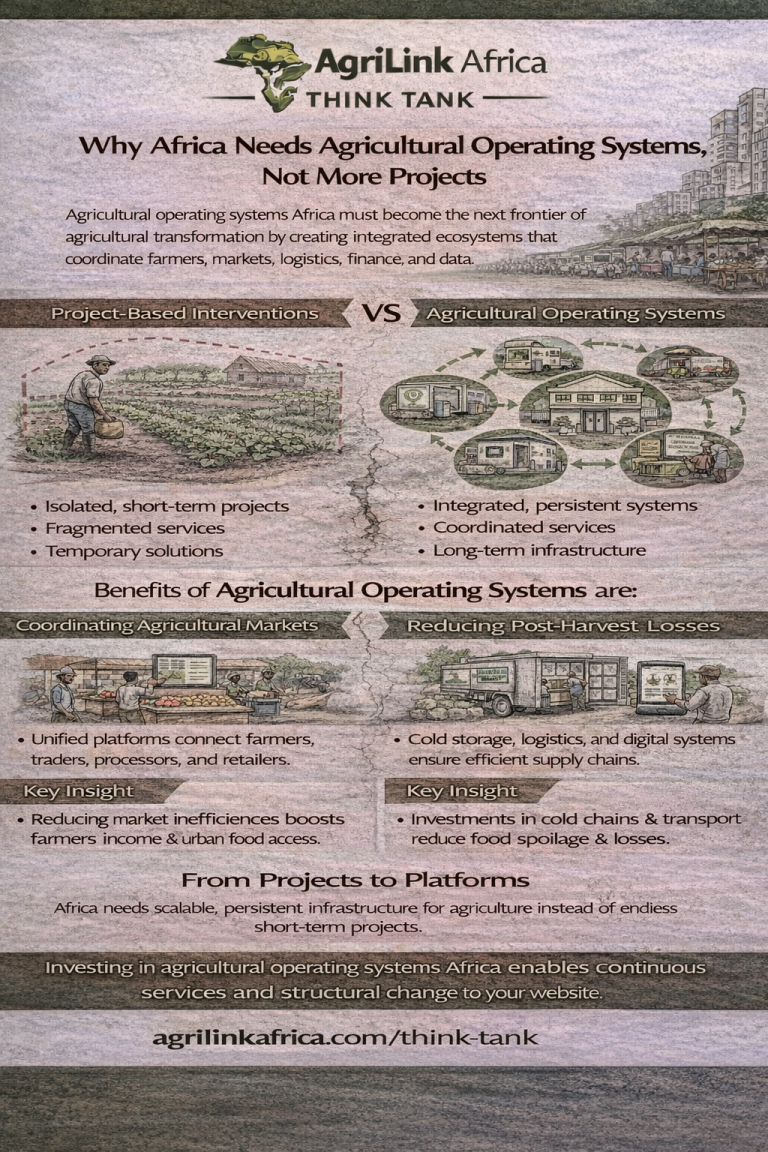
Why Africa Needs Agricultural Operating Systems, Not More Projects
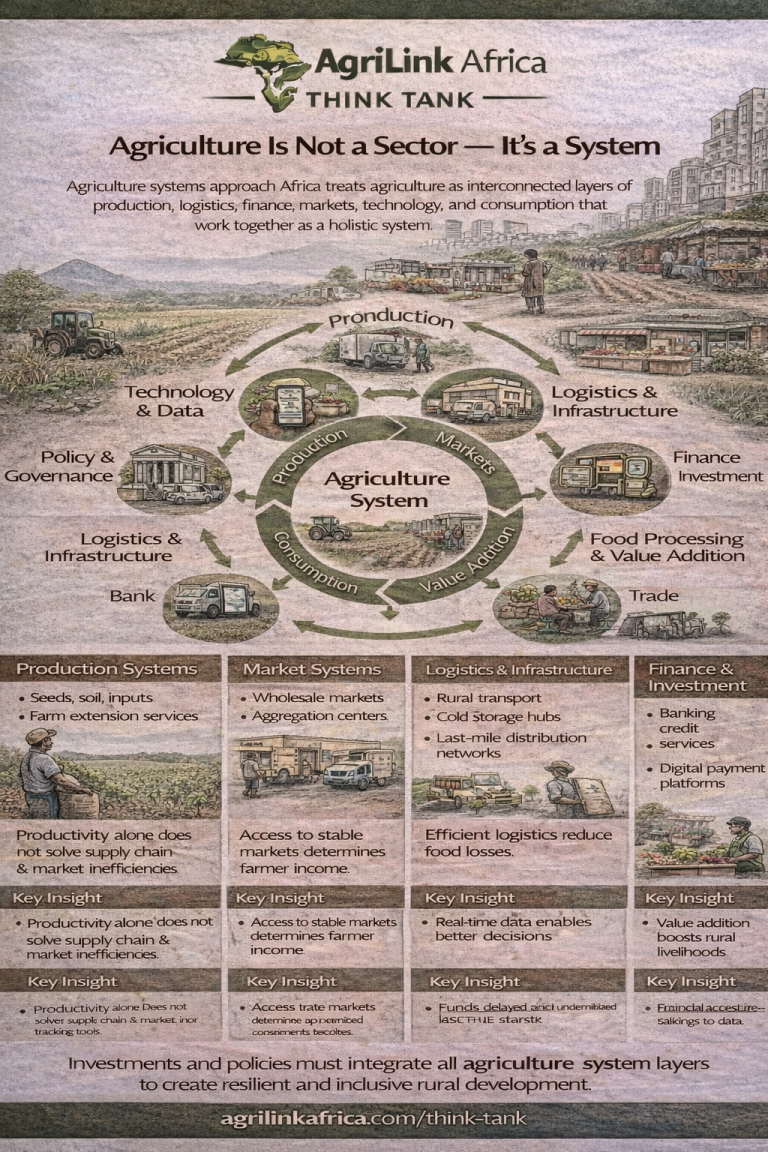
Agriculture Is Not a Sector — It’s a System

Recommended
Advertised Here

Overlay7

Abenezer Wondimagegn is the Founder & CEO of AgriLink Africa, a Research & Data Analyst, and Article Publisher. He specializes in Agriculture, Supply Chain, Logistics, Nutrition, E-commerce, and Business Investment. Through his work, he empowers farmers, strengthens food systems, and shares insights to drive innovation and sustainable growth in Ethiopia’s agricultural sector.

