
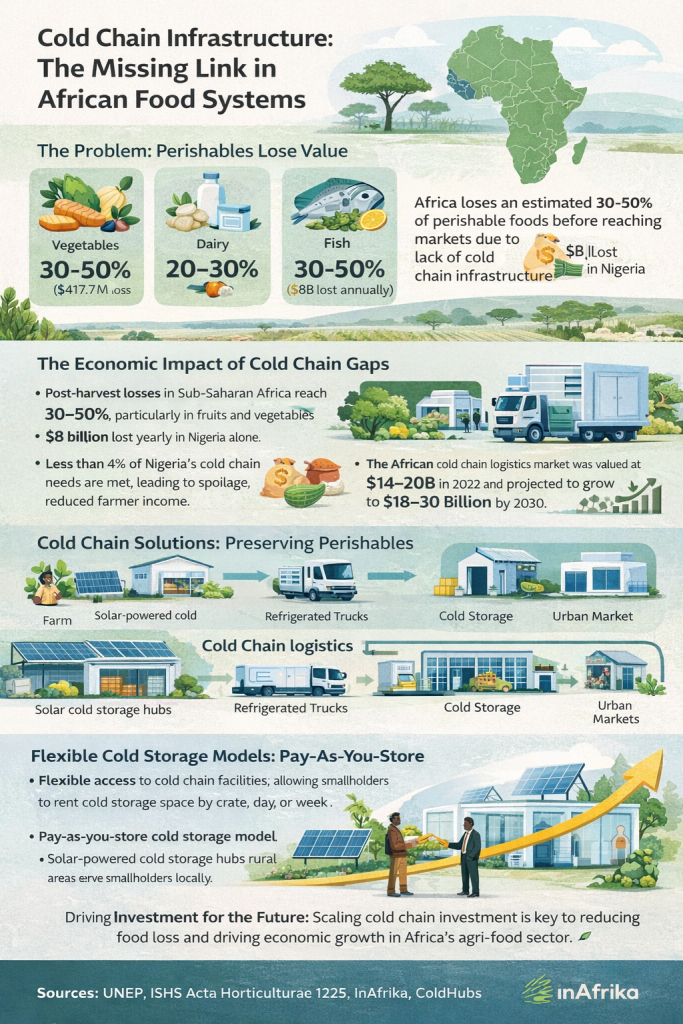
Africa produces a wide range of perishable agricultural products, including fruits, vegetables, dairy, meat, and fish. Yet a significant share of this output never reaches consumers in acceptable quality. The core constraint is not production capacity, but the absence of effective cold chain infrastructure. Cold chains — temperature-controlled systems covering storage, transport, and handling — are critical to preserving food value, stabilizing markets, and improving nutrition outcomes. Across much of Africa, however, these systems remain fragmented, underdeveloped, or entirely absent.
Why Perishables Lose Value in Africa
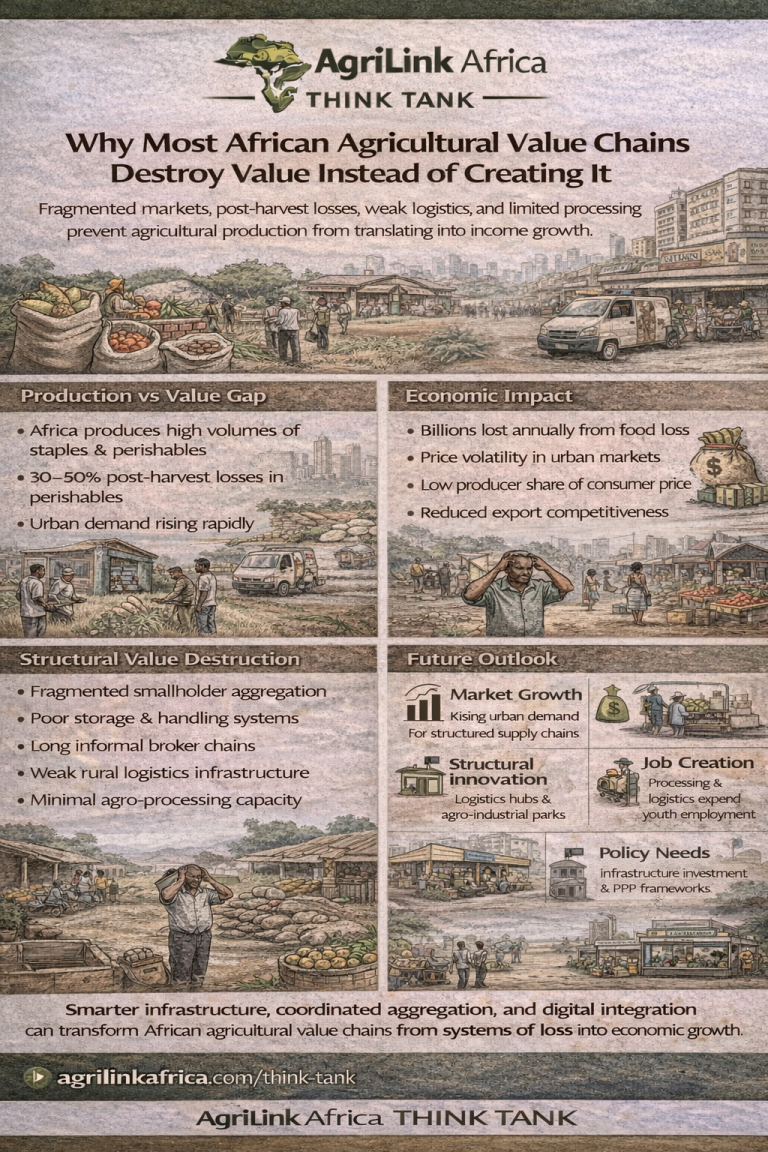
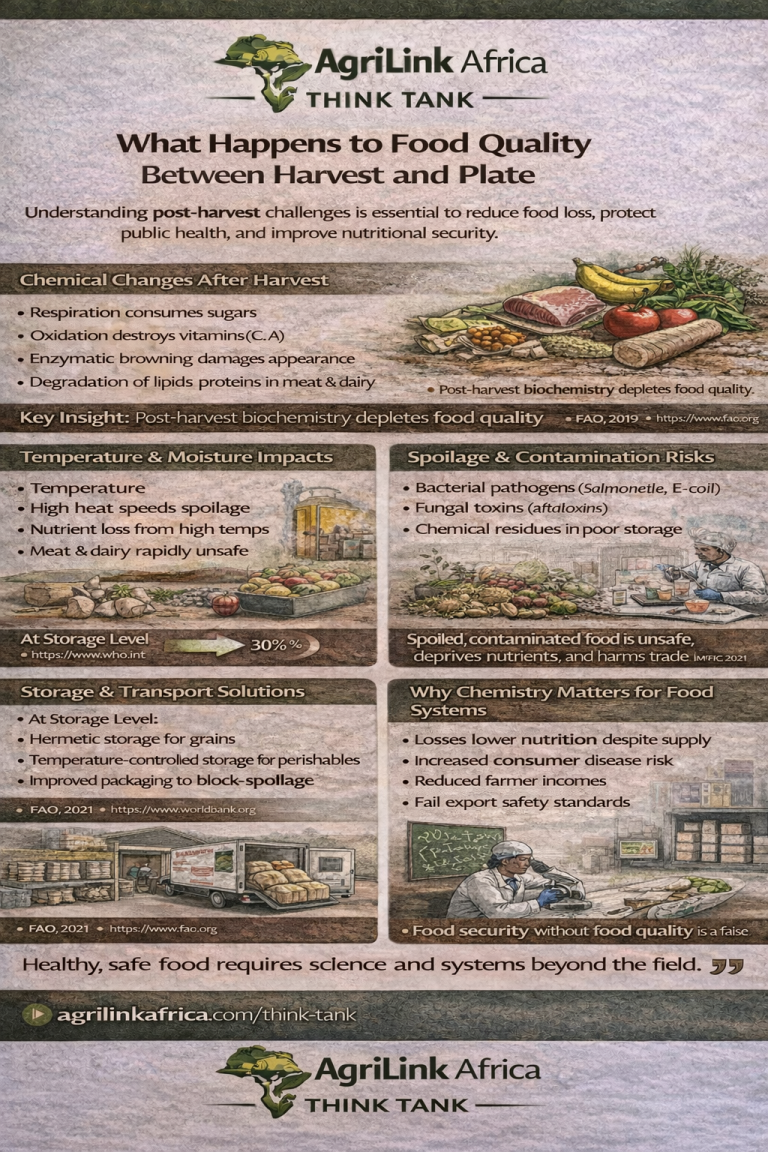
Perishable crops deteriorate rapidly after harvest if temperature, humidity, and handling conditions are not controlled. Peer-reviewed research shows that post-harvest losses for fruits and vegetables in Sub-Saharan Africa range between 30% and 50%, primarily due to poor handling practices, lack of cold storage, and weak logistics systems (MDPI, 2022).
The Food and Agriculture Organization estimates that Africa loses over one-third of its food production annually, with perishables accounting for the largest share of losses (FAO, 2019). These losses occur mostly between harvest and retail markets, where farmers are forced to sell immediately at low prices or absorb spoilage losses.
Beyond economic impacts, these losses undermine nutrition. Fruits and vegetables are major sources of micronutrients, and their deterioration reduces dietary diversity and food quality, particularly for urban and low-income populations (UNEP, 2021).
The Economics of Cold Chains
Cold chain infrastructure requires upfront investment in refrigerated storage, cold rooms, refrigerated transport, and reliable energy systems. While these costs are often cited as barriers, evidence shows that the cost of not investing is significantly higher.
The World Bank estimates that inadequate cold chain systems result in billions of dollars in annual losses across African agrifood systems, particularly in horticulture, fisheries, and livestock value chains (World Bank, 2020). In Nigeria alone, insufficient cold storage capacity contributes to food losses valued at several billion US dollars per year, especially for tomatoes, fish, and meat (AfDB, 2022).
By contrast, studies show that functional cold storage and refrigerated transport can reduce post-harvest losses by 25–50%, improve price stability, and extend market reach for producers (FAO, 2019). These gains often outweigh operating costs when cold chains are linked to reliable markets.
Regional Horticulture and Perishable Crop Examples
East Africa: Kenya and Uganda
In Kenya, horticulture is a major export sector, yet post-harvest losses have historically exceeded 35% for vegetables. A cold chain intervention supported by the United Nations Environment Programme demonstrated that access to cold storage and refrigerated transport significantly reduced spoilage and increased farmer incomes in peri-urban production zones (UNEP, 2021).
Uganda has also invested in large-scale cold storage infrastructure to support horticulture, fisheries, and dairy. New temperature-controlled warehouses near Kampala are designed to serve both domestic and export markets, reducing losses while improving compliance with international quality standards (World Bank, 2020).
West Africa: Nigeria
Nigeria produces large volumes of fruits and vegetables but lacks sufficient cold storage near production areas. Research indicates that less than 10% of perishable produce in Nigeria passes through any form of cold chain, resulting in extreme price volatility and waste (AfDB, 2022). This gap has prompted growing interest in decentralized cold storage hubs closer to farms and markets.
Horn of Africa: Ethiopia
Ethiopia’s horticulture and livestock export sectors are expanding, yet most perishable products are still transported without refrigeration. Government policy now recognizes cold chains as strategic infrastructure, offering tax incentives for cold storage equipment and encouraging private investment in logistics hubs (FAO, 2019).
Pay-As-You-Store Models: Expanding Access for Smallholders
One of the most promising innovations in Africa’s cold chain landscape is the pay-as-you-store model. Rather than owning cold storage, farmers rent space on a crate-by-crate or day-by-day basis. This approach lowers entry barriers for smallholders and traders who cannot afford long-term storage contracts.
In Nigeria, solar-powered cold room operators provide decentralized storage services near markets and production zones, allowing farmers to delay sales until prices improve while reducing spoilage (ColdHubs, 2023). Similar models are emerging in East Africa, combining digital booking systems with renewable energy to reduce operating costs and improve reliability (IFC, 2021).
These models demonstrate that cold chain infrastructure does not need to be centralized or capital-intensive to be effective; flexibility and proximity to producers are often more important.
The Role of Private Investment and Policy Support
Scaling cold chain systems across Africa will depend heavily on private investment, supported by enabling public policy. Governments play a critical role by:
-
- Reducing import duties on refrigeration equipment
-
- Investing in energy and transport infrastructure
-
- Integrating cold chains into national food security strategies
Public-private partnerships have proven effective in mobilizing capital and technical expertise for large-scale cold storage and logistics facilities (World Bank, 2020). Development finance institutions such as the African Development Bank and IFC increasingly view cold chains as essential to food systems transformation (AfDB, 2022; IFC, 2021).
Cold chain infrastructure is no longer a peripheral issue in African agriculture; it is a central determinant of food security, farmer income, and market efficiency. Without reliable cold storage and refrigerated logistics, gains in production will continue to





Abenezer Wondimagegn is the Founder & CEO of AgriLink Africa, a Research & Data Analyst, and Article Publisher. He specializes in Agriculture, Supply Chain, Logistics, Nutrition, E-commerce, and Business Investment. Through his work, he empowers farmers, strengthens food systems, and shares insights to drive innovation and sustainable growth in Ethiopia’s agricultural sector.

